The Autonomous Kitchen
From Alchemy to Algorithm: Closed-Loop Culinary State Machines
Cooking is the final domestic frontier that automation has failed to solve with conventional appliances. We do not need another timer with Bluetooth. We need a closed-loop sensory state machine that executes culinary craft as deterministic thermodynamic physics.
Food is Not a Recipe. It is a Sequence of Thermodynamic States.
For a century, kitchen appliances treated cooking as a function of time and power level: "Bake at 180°C for 25 minutes". But ingredients are biologically variable, room ambient temperatures drift, and moisture evaporates at fluctuating rates.
When a master chef cooks, they do not watch a clock. They listen to the frequency of sizzling oil, monitor the opacity of caramelizing onions, and register the volatile aromatic compounds released as proteins brown.
The Autonomous Kitchen replaces blind timers with an intelligent state machine: sensing chemical thresholds, actuating dynamic heat boundaries, and dosing ingredients precisely when the physical reaction demands it.
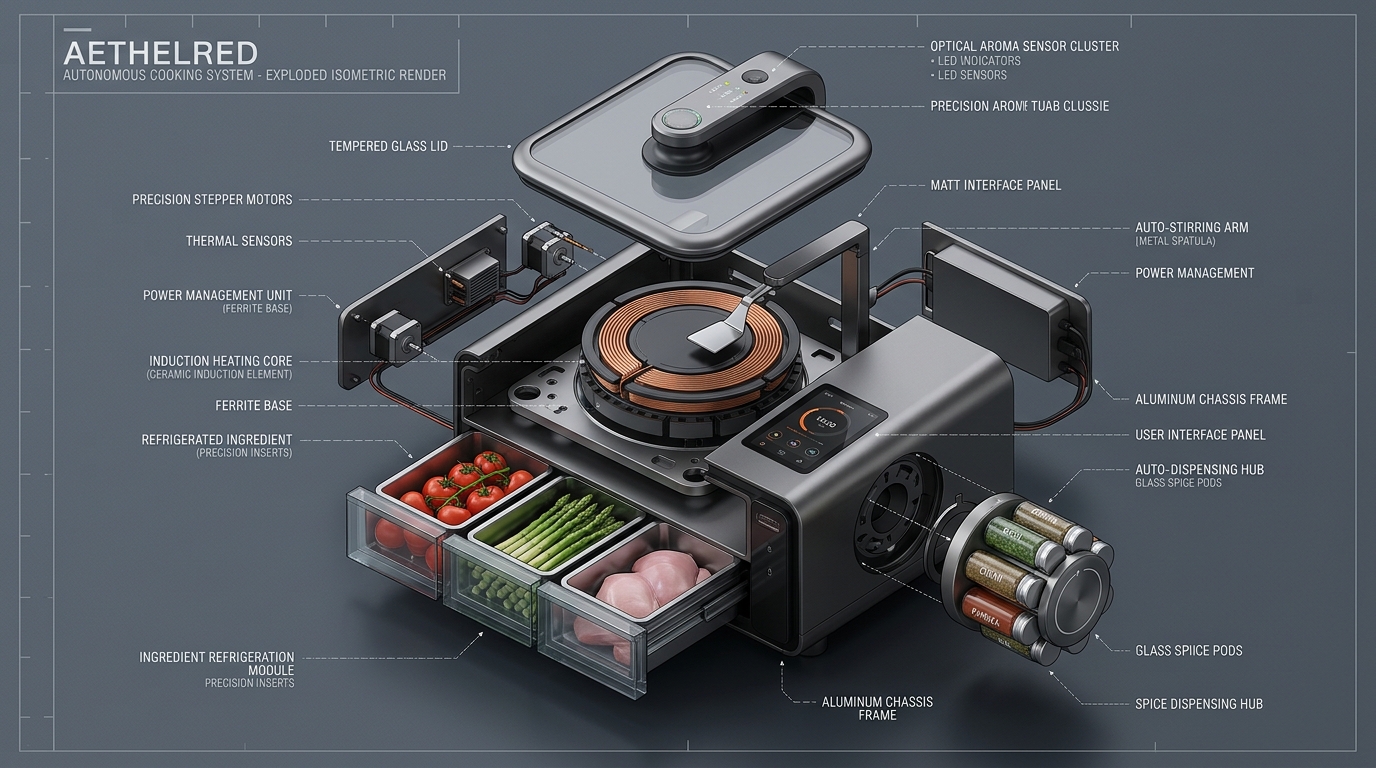
Exploded Hardware Subsystems
Dual-plane induction stator, multi-chamber vacuum spice carousel, active VOC olfactory sniffer, and optical temperature array operating under an embedded real-time microkernel.
Four Foundational Subsystems
How hardware intelligence translates complex culinary artistry into reliable domestic execution.
Sensory State Telemetry
Replaces crude timers with real-time Volatile Organic Compound (VOC) detection and thermal imaging, detecting the exact onset of the Maillard reaction and aroma inflection points.
Thermodynamic Closed-Loop Control
Dynamically adjusts induction zones and surface conduction in response to live pan telemetry, preventing moisture drowning and thermal shock regardless of ingredient variance.
Algorithmic Dosing Engine
Multi-axis automated dispensing for spices, emulsified gravies, and aromatics, synchronized to temperature phase transitions rather than arbitrary intervals.
Digital Dish Models (DDM)
Enables master chefs to record, calibrate, and distribute executable culinary algorithms. Food becomes a deterministic state program running on intelligent hardware.
The Human & Physical Interface
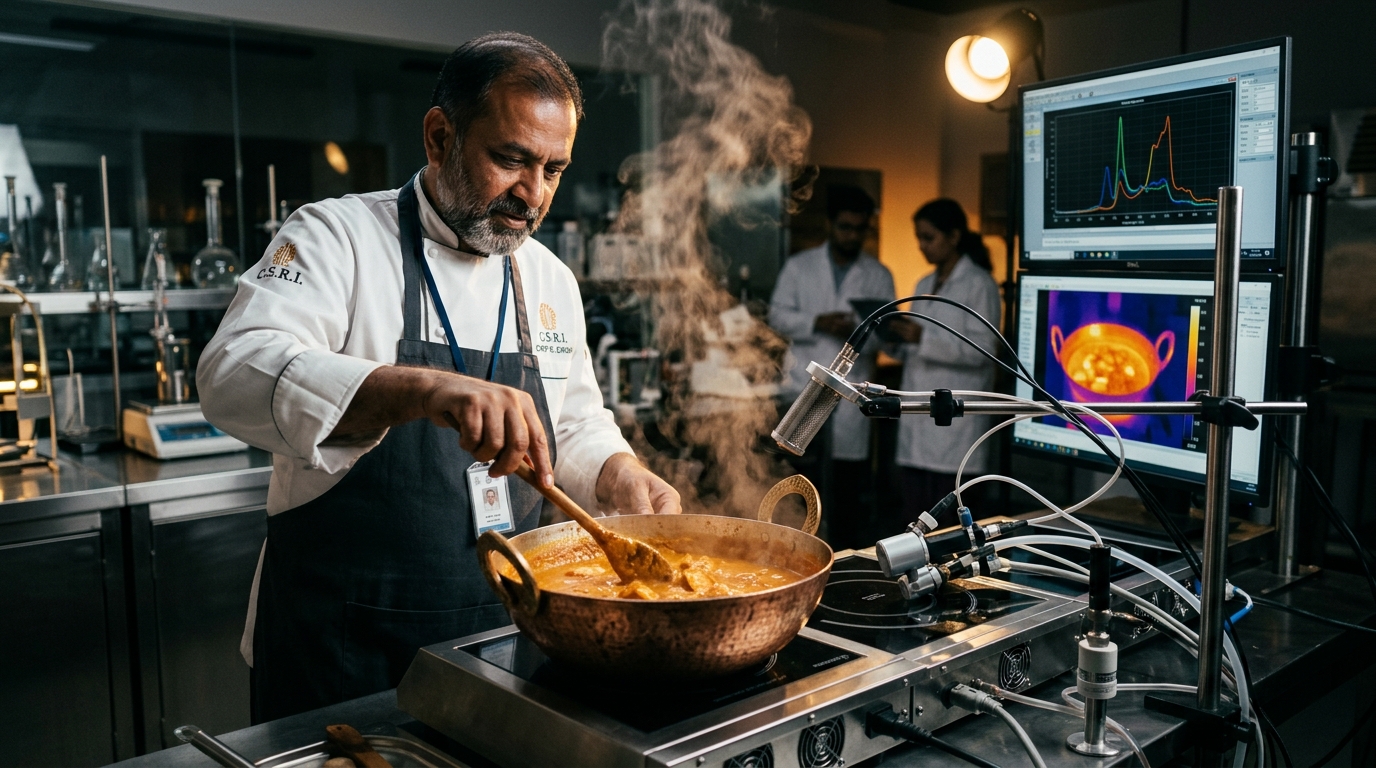
The Chef as Software Architect
Instead of packaging pre-frozen sauce packets, master chefs author executable Digital Dish Models. The culinary artisan encodes intuition into calibrated parameters.
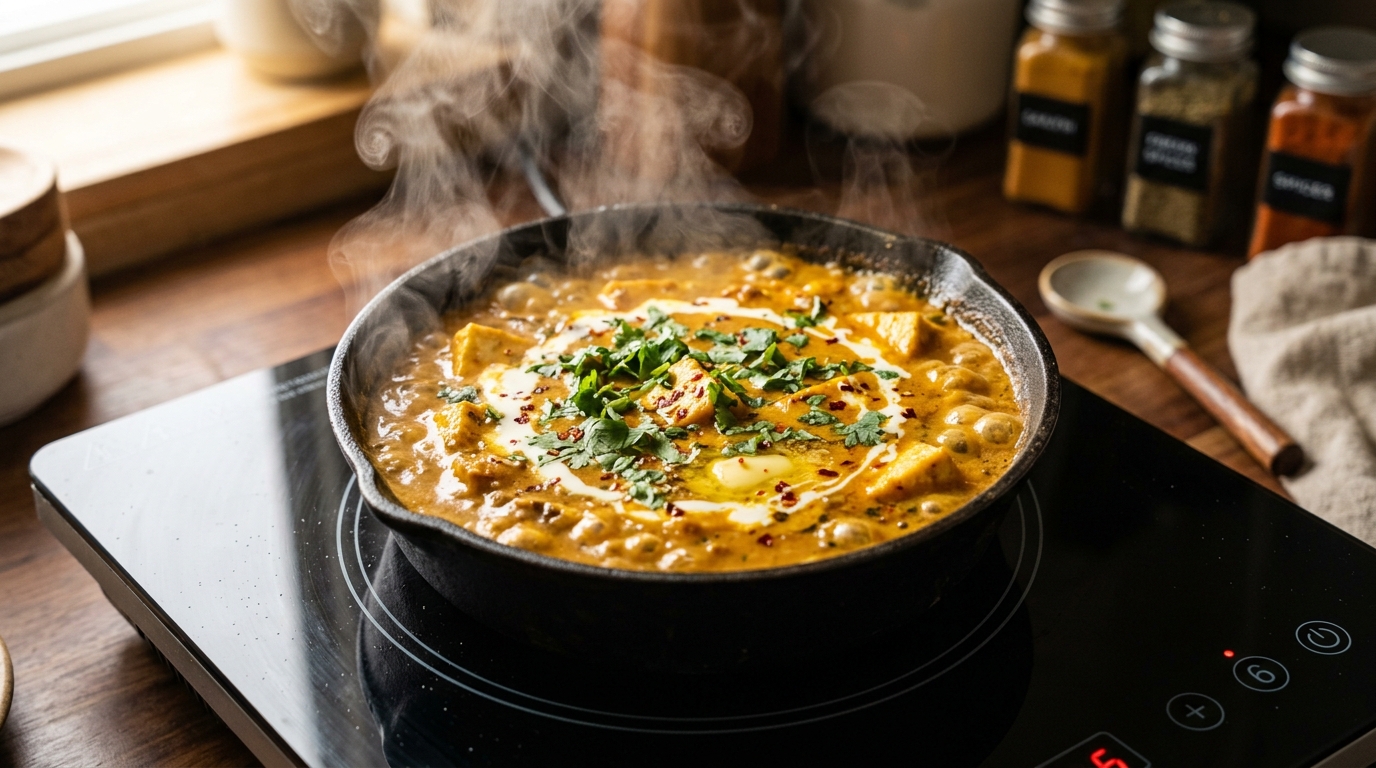
Zero-Variance Thermodynamic Execution
Sensory feedback loops monitor oil viscosity and protein caramelization in real-time, executing delicate regional recipes (e.g. Paneer Butter Masala) with authentic texture.
Why an HR & Decision Thinker Studies Autonomous Cooking
At first glance, an autonomous kitchen appliance appears distant from enterprise decision management and strategic HR. In reality, they are identical problems occurring in different substrates:
"An organization that blindly inherits stale policies without remembering their reasoning is no different than an automated cooker that follows a timer recipe while the food is burning. Both systems fail because they lack closed-loop sensory feedback and context memory."
Whether engineering SigmaGo to capture organizational exceptions and precedent, or designing an Autonomous Kitchen to sense chemical state transitions, the mission is identical: transforming tacit human art into enduring, intelligent systems.